
What to do When Someone Relapses
Learn the stages of relapse, warning signs, what is and isn’t considered a relapse, and the steps to take after a setback to rebuild recovery.- What Is a Relapse?
- The Three Stages of Relapse
- What Is Not Considered a Relapse?
- What to Do When Someone Relapses
- Steps to Take After a Relapse
- Healing After Relapse
- When to Seek Professional Help
When relapses happen, the best thing you can do is respond quickly with compassion and understanding. Knowing that relapse may be part of the recovery process and does not erase all the progress made, but is a sign that something in the recovery process or plan needs to be changed. Remember to stay calm, encourage honesty, and focus your attention on immediate safety first, especially if there is a risk of overdose, self-harm, or the mixing of substances. Encourage the person to reconnect with counseling and meetings, sober support, or their sponsor as soon as possible. Avoid lectures, threats, or guilt trips, which can lead to fear and often shame that can push them deeper into isolation and addiction.
Instead of viewing a relapse as a failure, it can be seen as an opportunity to learn. Understanding what happened before the relapse—such as stress, certain people, places, emotions, loneliness, or even overconfidence—can reveal the triggers that contributed to the decision to use again. Talking through these experiences helps identify problem areas, strengthen coping skills, and develop a plan to better prevent future relapses.
Relapses are often seen as a step back in recovery, but they do not erase the gains someone has made. For some people, relapse is part of the recovery process, and knowing how to see what is happening before the relapse happens can give you a better understanding of the addiction disease. Recovery often involves setbacks, and for the people who have achieved long-term sobriety, most have experienced relapses along their road to recovery. The goal is not to pretend it didn’t happen but rather to help the person get back on track with their recovery before a full-blown return to addiction happens.

What is relapse?
Relapse is the term used for someone who has returned to drug or alcohol use after a period of sobriety or abstinence. Relapses can be discouraging and painful for the family and the individual who has slipped up, but they don’t erase the progress made through treatment or abstinence. Addiction is a chronic disease involving behavioral, emotional, and physical patterns that, in turn, make recovery challenging months or even years after they have stopped using.
Relapses can happen at every stage of recovery, and knowing the signs that lead up to the relapse while having a strong support system in place can help prevent temporary setbacks from becoming a long-term return to addiction. Relapses often begin slowly, developing in stages, usually beginning emotionally and mentally before substance use occurs.
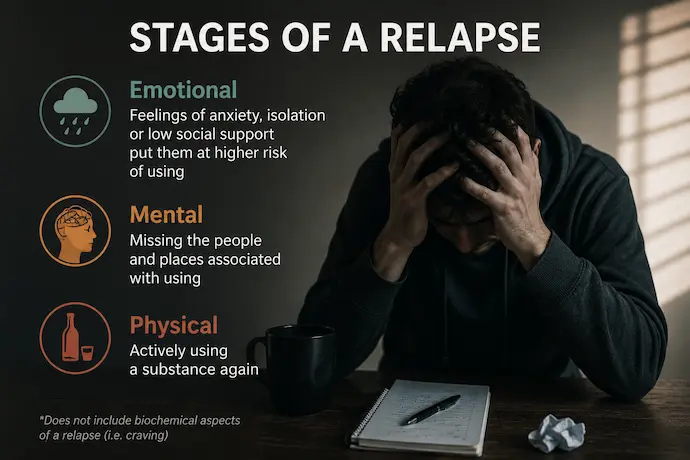
The Three Stages of Relapse:
Emotional Relapse: When a person experiences an emotional relapse, they are not necessarily looking to use drugs or alcohol yet. Their behaviors and emotions are starting to create a foundation that could lead to relapse. Common warning signs of an emotional relapse include isolation from family or those who are supportive, bottling up their emotions, and skipping meetings or therapy sessions. They may start to ignore hygiene, nutrition, or self-care. Increase irritability, anxiety, or stress or other warning signs.Once the healthy coping strategies start to diminish, emotional relapse starts and will gradually increase into more dangerous stages if left unchecked.
Mental Relapse: Mental relapse begins while a person is struggling internally with wanting to stay sober and the desire to return to substance abuse. Cravings and thoughts about drugs or alcohol become more frequent, while the mind may be romanticizing past use and the fun they used to have.
Signs of a mental relapse can include cravings for substances, reliving the past drug or alcohol use, minimizing the past consequences, justifying potential use, lying to others, hiding thoughts/behaviors, and or justifying potential use.
This time is often a great time to hold an intervention. Getting them to reach out for support, go to meetings, talk to a counselor, or encourage sober support can help quell the relapse before actual use occurs.
Physical Relapse: What we define as a physical relapse is when a person returns to using drugs or alcohol. This is most commonly a result of emotional or mental struggles that have been building over time. Physical relapse is a serious concern, but it does not erase the progress someone has already made in their recovery. What happens after physical relapse matters most of all. Getting them to agree to seek help immediately, whether that means reconnecting with previous treatment, seeking new help, or getting their sponsor involved to achieve stability and continue moving forward.
When we view relapses as a process and not a single event. It can help families and individuals respond more effectively. When we start to understand relapses from a clinical perspective, it can remove some of the guilt and shame that can keep people from asking for help.
Relapsing does not necessarily mean failure. It is often a sign that something needs to be addressed in treatment or counseling, so the individual doesn’t fall into the same trap. Adjusting treatment, coping skills, or getting additional support can help create healthier recovery plans.

What Is Not Considered a Relapse?
Accidental Exposure: When a person unknowingly consumes alcohol, or substances through food, drinks, or medications without intent, If someone is exposed to drugs or alcohol accidentally and it does not lead to continued use, it is not generally considered a relapse.
One-time use: People sometimes romanticize about use and have what they call a slip or one-time use. This does not necessarily constitute a relapse if they do not return to continued substance use. This should be addressed seriously and honestly, but it does not erase progress in recovery. With quick action and accountability, you can prevent future relapse.
 What to Do When a Loved One Relapses
When someone relapses, the most important thing you can do is respond with compassion rather than anger or judgment. A relapse does not erase the progress they have made or mean that treatment has failed. Instead, it often signals that additional support or changes to their recovery plan are needed. Stay calm, encourage honesty, and focus on their immediate safety, especially if there is a risk of overdose or mixing substances. Encourage them to reconnect with their counselor, sponsor, recovery meetings, or treatment program as soon as possible. Avoid blaming, lecturing, or making threats, as shame and guilt can make it harder for someone to seek help. With understanding, accountability, and timely intervention, many people can regain their footing and continue moving forward in recovery.Steps to Take After a Relapse
When someone relapses, we can feel overwhelmed, but their actions do not have to define their future. Taking steps to help them recover quickly and get back on track should include:Staying calm and avoiding shame-based reactions
Reconnecting with treatment, sober support groups, therapy, and meetings
Identifying triggers or stressors that contributed to the relapse
Creating a new relapse prevention plan
Setting realistic recovery goals
Recovery is rarely without hiccups and almost never a straight line. For most of us who have achieved long-term recovery, we have had our own setbacks along the journey. Through a healthy support system and continued commitment to sobriety, it becomes possible to rebuild and move forward stronger than ever before.

Healing After Relapse
Healing after a relapse is a process that requires patience, honesty, and a renewed commitment to recovery. While returning to substance use can feel discouraging, it does not erase the progress that has already been made. The most important step is recognizing what happened, accepting responsibility without becoming overwhelmed by guilt or shame, and taking action to get back on track. Reconnecting with treatment, attending support groups, working with a counselor or sponsor, and strengthening healthy coping skills can help rebuild confidence and stability. It is also important to identify the triggers that contributed to the relapse and develop new strategies for managing stress, cravings, and difficult emotions. With consistent support, accountability, and a willingness to continue growing, many people not only recover from a relapse but also gain valuable insight that strengthens their long-term sobriety.
When to Seek Professional Help
Seeking professional help after a relapse can prevent a temporary setback from becoming a full return to active addiction. If someone has resumed using drugs or alcohol, is experiencing frequent cravings, withdrawing from family and friends, skipping recovery meetings, or struggling with their mental health, it may be time to seek additional support. Professional treatment can also be beneficial when someone feels overwhelmed, has relapsed more than once, or no longer feels confident in their ability to maintain sobriety on their own.Treatment does not always mean starting over. Many people simply need to adjust their recovery plan, increase counseling sessions, return to outpatient treatment, attend a residential program, or reconnect with their sponsor and recovery community. Every relapse provides an opportunity to identify new triggers, strengthen coping skills, and build a more effective plan for long-term recovery.
If there is any risk of overdose, suicidal thoughts, severe withdrawal symptoms, or the use of multiple substances at the same time, seek immediate medical attention or emergency care. Early intervention can save lives and greatly improve recovery outcomes.
No matter where someone is in their recovery journey, help is available. Reaching out early can make all the difference. If you or someone you love is struggling with a relapse or is concerned about the warning signs of one, contact us today. We can help you explore treatment options, answer your questions, and connect you with the support needed to begin moving forward again.
Sources
Is addiction a chronic relapse disease?
Medication-assisted treatment statistics
Erik Epp – Content Author
Summary
Service Type
What to Do After a Relapse | Signs, Stages & Recovery
Area
Nationwide/USA
DescriptionRelapse doesn't erase recovery. Learn the warning signs, stages of relapse, what isn't considered a relapse, and how to get back on track with support and treatment.