
Private health insurance may help pay for drug or alcohol treatment in Florida, including medical detoxification, inpatient or residential rehabilitation, partial hospitalization, and outpatient services. Coverage depends on the individual policy, clinical circumstances, treatment provider, insurance network, authorization requirements, and requested level of care.
Not every Florida drug rehab accepts every insurance plan, and having insurance does not necessarily mean treatment will be free. Deductibles, copayments, coinsurance, out-of-network charges, and noncovered services may remain the patient’s responsibility.
Addiction No More provides confidential assistance to individuals and families exploring private addiction-treatment options. If you have private health insurance, have your insurance card available when you call.
Have Private Health Insurance?
Your policy may include benefits for eligible substance-use treatment. Call to discuss possible Florida treatment options and questions to ask about your coverage.
Calling does not obligate you to enter treatment. Benefit information is not a guarantee of payment. Admission, authorization, insurance participation, coverage, availability, personal costs, and treatment outcomes cannot be guaranteed.
Do not send insurance information through an unsecured email or public message. Information from the insurance card may be needed to investigate potential benefits and treatment options.
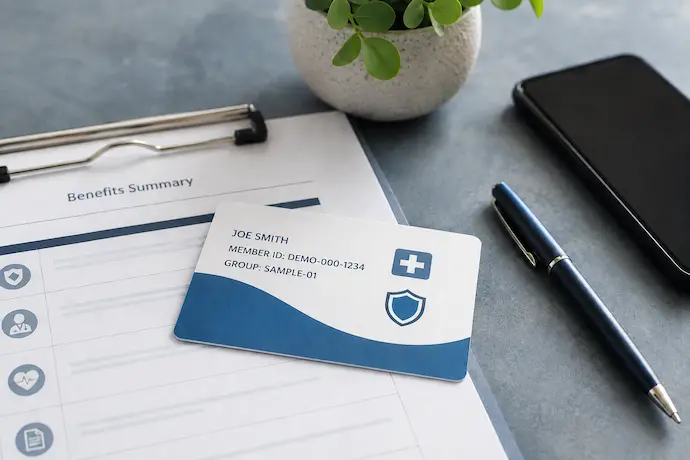
Insurance benefits may help cover eligible addiction-treatment services. Coverage must be verified for each individual policy.
Does Health Insurance Cover Drug or Alcohol Rehab?
Many private health plans include benefits for mental-health and substance-use treatment. Marketplace plans include mental-health and substance-use disorder services as essential health benefits. Other individual and employer-sponsored plans may also provide behavioral-health benefits.
However, the existence of a substance-use benefit does not mean every service, treatment center, or requested length of stay will be approved. Coverage may depend on:
- The benefits included in the policy
- Whether the policy is currently active
- The individual’s clinical needs
- The requested level of care
- Medical-necessity requirements
- Prior-authorization requirements
- The treatment provider’s network status
- The deductible, copayment, and coinsurance
- Services or facilities excluded under the policy
The insurance company and treatment provider must confirm coverage. A preliminary discussion or verification of benefits is not a guarantee that every service or claim will be paid.
Which Addiction-Treatment Services May Be Covered?
Depending on the policy and medical circumstances, insurance benefits may apply to one or more levels of addiction treatment.
Medical Detoxification
Medical detox provides evaluation, monitoring, and support during withdrawal. Coverage may depend on the substance involved, withdrawal risks, medical history, and whether inpatient monitoring is considered medically necessary.
Learn more about medical detoxification programs.
Inpatient or Residential Treatment
Inpatient and residential programs provide a structured living environment away from home. Insurance authorization can depend on clinical criteria, the provider’s network status, and the benefits included in the policy.
Explore inpatient drug and alcohol treatment programs in Florida.
Partial Hospitalization
A partial hospitalization program, sometimes called PHP, provides structured treatment for several hours a day without requiring the participant to live at the facility. Some people enter PHP after detoxification or residential treatment, while others begin treatment at this level.
Intensive Outpatient Treatment
Intensive outpatient programs generally provide more scheduled treatment hours than standard outpatient counseling while allowing participants to live at home or in another community setting.
Standard Outpatient Treatment
Outpatient services may include individual counseling, group therapy, medication management, and recovery planning.
Learn more about outpatient addiction treatment.
Dual-Diagnosis Care
Someone experiencing addiction along with depression, anxiety, trauma, bipolar disorder, or another mental-health condition may need a program equipped to address both concerns.
Read about dual-diagnosis treatment programs.
Medication Services
Some policies cover medications and medical appointments used to treat opioid or alcohol use disorders. Formulary restrictions, prior authorization, participating prescribers, and pharmacy benefits may affect coverage.
In-Network and Out-of-Network Rehab Programs
An in-network treatment provider has a contractual relationship with the health plan or its behavioral-health administrator. Using an in-network provider will generally result in lower personal costs, although deductibles, copayments, coinsurance, and authorization requirements may still apply.
An out-of-network provider does not have the same contractual relationship with the plan. Some PPO and similar plans include out-of-network benefits, while many HMO and EPO plans provide little or no nonemergency out-of-network coverage.
Out-of-network care may involve:
- A separate or higher deductible
- Higher coinsurance
- Possible balance billing
- Lower reimbursement from the insurance company
- Additional authorization requirements
- Greater personal financial responsibility
Out-of-network treatment is not automatically better, more individualized, or more effective. The decision should be based on clinical suitability, provider qualifications, available services, insurance coverage, and total expected cost.
Learn more about in-network drug rehab centers.
How Insurance Benefits Are Checked
Checking benefits can help identify what the policy appears to cover before admission. Information commonly requested includes:
- Name of the insurance company
- Member or policy identification number
- Group number, when applicable
- Name and date of birth of the policyholder
- Name and date of birth of the person seeking treatment
- Customer-service or provider-service telephone number
Questions that may need to be investigated include:
- Is the policy currently active?
- Are substance-use treatment services included?
- Is the prospective provider in-network?
- Is prior authorization required?
- Has the deductible been met?
- What copayment or coinsurance may apply?
- Are residential treatment benefits included?
- Are out-of-network benefits available?
- Does the plan use a separate behavioral-health administrator?
- Will continued treatment require additional reviews?
Benefits can change, and claims remain subject to the policy’s terms and the insurer’s review. Final financial responsibility should be confirmed directly with both the treatment provider and insurance company.
What to Have Available When You Call
- Your private health-insurance card
- The policyholder’s name and date of birth
- Information about the substances being used
- Current medications and important medical concerns
- Previous detoxification or treatment history
- Your preferred treatment location
Call 1-800-513-5423 for confidential help exploring private addiction-treatment options.
Addiction No More does not make medical-necessity decisions, authorize insurance benefits, or guarantee payment.
Deductibles, Copayments and Personal Costs
Insurance coverage rarely means that every treatment expense is paid in full. Possible personal costs include:
- Deductible: The amount a member may be responsible for paying before certain plan benefits begin.
- Copayment: A fixed amount charged for a covered service.
- Coinsurance: A percentage of the allowed cost that may remain the member’s responsibility.
- Out-of-pocket maximum: The maximum amount a member may pay for eligible covered services during a plan year, subject to the plan’s rules.
- Noncovered services: Amenities, upgraded accommodations, transportation, or other services excluded from the policy.
- Balance billing: A possible difference between an out-of-network provider’s charge and the amount recognized by the health plan.
Ask for a written estimate before admission. The estimate should explain what the quoted price includes, what insurance is expected to pay, and which charges may remain the patient’s responsibility.
No website or telephone representative can truthfully promise that treatment will cost nothing before the insurance company processes eligible claims.
Learn more about whether insurance will pay the entire cost of drug rehab.
Medical Necessity and Prior Authorization
An insurance company may require clinical information before authorizing detoxification, residential treatment, or another level of care. This review is often referred to as medical-necessity review or utilization review.
The insurer may consider:
- The substance being used
- Frequency and duration of use
- Possible withdrawal risks
- Medical and mental-health conditions
- Previous treatment attempts
- Safety and stability at home
- The level of care recommended by qualified professionals
Prior authorization does not guarantee payment. It generally means the insurer reviewed the available information and authorized a service subject to the policy’s terms. Continued treatment may require additional clinical reviews.
A person should not choose a medically inappropriate level of care solely because it appears less expensive or easier to have approved. Treatment recommendations should be based on an individual assessment.

Confidential assistance is available for Florida residents seeking local or out-of-area addiction treatment.
Choosing a Florida Rehab That Accepts Insurance
A program appearing in an insurance directory does not automatically make it appropriate for every person. Before entering treatment, ask about:
- Florida licensing and applicable accreditation
- Available levels of care
- Medical and nursing coverage
- Clinical staff credentials
- Detoxification capabilities
- Dual-diagnosis services
- Medication policies
- Individual and group therapy schedules
- Family involvement
- Discharge and aftercare planning
- Network participation
- Total expected personal cost
Some people prefer treatment close to home so family members can participate. Others consider another Florida community or an out-of-state program because of availability, privacy, specialized services, or insurance-network considerations.
Traveling farther is not automatically more effective. The program’s clinical suitability and affordability matter more than its distance from home, appearance, or amenities.
For a broader overview, visit our guide to drug and alcohol treatment in Florida.
Insurance Companies and Plan Differences
Plans issued or administered by companies such as Aetna, Blue Cross and Blue Shield organizations, Cigna, UnitedHealthcare, and other insurers may include substance-use treatment benefits. However, two policies carrying the same insurance-company name can have very different networks, deductibles, exclusions, and authorization requirements.
Coverage depends on the exact policy—not only the insurance company’s name. Employer plans may also use a separate company to administer behavioral-health benefits.
Addiction No More does not claim that every listed insurer is accepted by every treatment provider. Insurance participation and benefits must be confirmed for the specific policy and facility under consideration.
View our general insurance-company information.
What If Insurance Coverage Is Denied?
A denial does not necessarily mean that no treatment options are available. Ask the insurer for the reason in writing and request information about appeal rights and applicable deadlines.
Possible next steps may include:
- Correcting incomplete or inaccurate information
- Submitting additional clinical documentation
- Requesting an internal appeal
- Requesting an external review when available
- Considering another in-network provider
- Discussing a different clinically appropriate level of care
- Requesting a single-case agreement when appropriate
- Asking the provider about documented payment arrangements
Keep copies of denial letters, reference numbers, clinical records, benefit explanations, and correspondence. Appeal rights and deadlines vary, so contact the insurance company promptly.
What If I Do Not Have Private Insurance?
People without private insurance may need to explore Medicaid, state-funded programs, nonprofit providers, community behavioral-health services, or sliding-fee treatment.
Addiction No More cannot approve government funding or guarantee free treatment. Florida residents seeking publicly supported services can review our guide to state-funded and lower-cost addiction treatment in Florida.
Questions to Ask Before Admission
- Is the facility currently in-network with my exact policy?
- Has the insurer authorized the requested level of care?
- What deductible, copayment, or coinsurance applies?
- Could I receive a balance bill?
- Which services are excluded from the financial estimate?
- Will continued treatment require additional reviews?
- What happens if the insurer authorizes fewer days than recommended?
- Who is responsible for obtaining authorization?
- What is the facility’s cancellation or refund policy?
- Can I receive the estimated financial responsibility in writing?
Frequently Asked Questions
Will private insurance pay for rehab in Florida?
Many private policies include benefits for eligible substance-use treatment. Actual coverage depends on the policy, network, clinical circumstances, prior authorization, provider, deductible, and other plan requirements.
Will insurance pay the entire cost?
Possibly, but it should never be assumed. A deductible, copayment, coinsurance, noncovered service, or out-of-network charge may remain the patient’s responsibility. Payment cannot be guaranteed before eligible claims are processed.
Can I use insurance for medical detox?
Some policies cover medically necessary detoxification. The insurer may review the substance involved, withdrawal risks, medical history, requested setting, and participating provider before authorizing care.
Does every Florida rehab accept insurance?
No. Some facilities participate with certain plans, some accept out-of-network benefits, and others operate primarily through self-payment or public funding.
Read more about whether all drug rehab centers accept private insurance.
What is the difference between PPO and HMO coverage?
PPO plans frequently provide more flexibility to use out-of-network providers, although personal costs may be higher. HMO plans generally require members to use participating providers except in limited circumstances. The exact policy controls.
Can my insurance company require prior authorization?
Yes. Plans may require prior authorization or medical-necessity review for detoxification, residential treatment, or other services. Authorization requirements should be checked before admission whenever circumstances allow.
Can I attend treatment outside Florida?
Possibly. Coverage depends on the policy’s service area, provider network, out-of-state benefits, authorization requirements, and emergency rules. Contact the insurer and treatment provider before making travel arrangements.
Does verifying my benefits guarantee coverage?
No. Verification describes the benefits that appear to be available at that time. Final payment depends on eligibility, authorization, medical necessity, covered services, accurate claims, and the policy’s terms.
What if I cannot afford my deductible?
Ask the provider whether a documented payment arrangement or another treatment option is available. Do not assume that a deductible can be waived. Any financial arrangement should be explained clearly and provided in writing.
Confidential Help Exploring Addiction Treatment
Have your private health-insurance card available when you call. Calling does not obligate you to enter treatment.
Important disclosure: Addiction No More is an information and referral service, not a treatment facility, medical provider, emergency service, insurance company, or government agency. We do not diagnose conditions, prescribe treatment, make medical-necessity decisions, authorize insurance benefits, or guarantee payment. Program availability, licensing, services, admission, insurance participation, coverage, and costs must be confirmed directly with the treatment provider and insurance company.
Written by Erik Epp
Erik Epp is a founder of Addiction No More and has more than 20 years of experience helping individuals and families navigate addiction-treatment options. Read Erik Epp’s full bio.
Last updated:
Florida residents: Calls generated by this website may be answered by Best Treatment Center LLC and Intervention Services. Please review our Florida Disclosure for information about represented treatment providers.
Emergency information: Addiction No More is not an emergency or crisis service. Call 911 for an overdose, seizure, loss of consciousness, difficulty breathing, severe withdrawal symptoms, or another medical emergency. Call or text 988 for an immediate mental-health or suicide crisis.